
 The Boston Globe published an interesting op-ed piece earlier this week with suggestions of ways that the incoming secretary of energy, Steven Chu, can spur the development of clean technologies in the United States. The article, co-authored by Nick d’Arbeloff, the executive director of the New England Clean Energy Council, and Hemant Taneja, a managing director of at General Catalyst Partners and the council’s co-chairman, is aggressive, but elegant in its simplicity. Clearly, the public chatter about clean energy has died down as oil prices have tumbled from $147 to less than $40 per barrel. Nevertheless, these are very important issues that Chu must address , so our nation can avoid another energy bubble in the future, reduce our dependence on unstable regimes for our energy supply, and fight global warming.
External Resources
Upcoming Event: DM Going Green – Separating Fact and Fiction (1/13/09)
Hey all – A quick pre-holiday message of thanks for reading my blog. Thanks for all of your comments and suggestions. They mean a lot!
I wanted to pass along some information on an event in Massachusetts that I will be speaking at next month that is open to the public. I hope you can make it!
****
DM Going Green – Separating Fact and Fiction
Kermit the Frog used to lament, “It’s not that easy being green.” This is especially true for direct marketers. Our industry has been under pressure from the media and the court of public opinion – even as it develops and drives new sustainable practices. And, going green will continue to be a critical issue for vendors, clients and regulators in the coming year. At NEDMA, we’ve put together a panel of experts from a variety of direct marketing disciplines to talk about how direct is going green, what are the facts (and what is fiction) about the green movement, and exactly what it means to you and your business. These experts will talk about how they and their clients went green – and guide you through the pitfalls and business opportunities they encountered along the way.
When: 1/13/2009, 8:30 AM to 10:30 AM
Where: Microsoft Seminar Facility
Panelists:
- Ben Grossman, Director, Green Marketing & Sustainability Practice, Grossman Marketing Group
- Mary McCormick, Senior Account Manager, Neenah Paper Inc.
- Brook Spaulding, President and co-founder, Circinus International LLC
- Charles Vidich, Manager, Environmental Programs, U.S. Postal Service Northeast Area
Moderator:
- Mariah Hunt, Senior Production Manager, Digitas
Please click here to read more about the event and to register.
****
Best wishes to all for a happy, healthy and peaceful holiday season and New Year! More insights, observations and news to come in 2009!
Agassi, Friedman, and sustainable enterprises
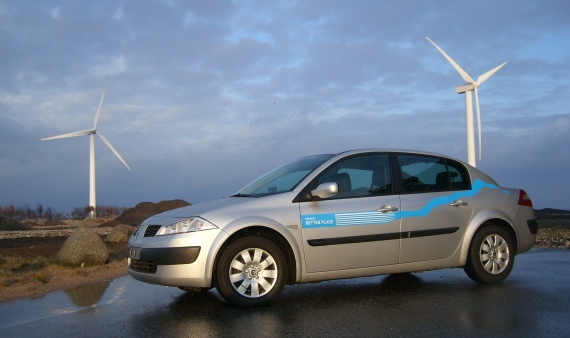
The Better Place car (prototype)
In July, I used an op-ed piece by Tom Friedman from the New York Times to discuss the importance of renewable energy, and how we as marketers can incorporate it into our printed communications. One of Friedman’s examples was Shai Agassi, the founder of Better Place, a company focused on creating electric car grids around the world. What’s exciting about their business model is that it approaches the car business much in the same way that cell phone networks like AT&T and Verizon Wireless approach their own – they plan to sell miles like these networks sell minutes.
Friedman wrote a follow-up piece about Agassi and his company last week, and I wanted to make sure readers of Sustainable Ink didn’t miss it.
I had the opportunity to hear Agassi speak in person earlier this month at the Museum of Science in Boston. He was an inspiring presenter and certainly a person with a great vision. Although I cannot guarantee whether his plan will work, I was impressed by his resolve, especially in the face of rapidly declining energy prices. Although people may be less apt to adopt his electric car model when gas prices are under $2/gallon in the United States, he laid out a plan for success, and delivered his message in a clear and exciting way.
His determination should serve as an excellent example to other executives who have either made public commitments to sustainability or had been considering green initiatives when the economy was stronger and now are mulling whether they should move them to the back burner until the economy turns the corner. My strong advice to these leaders would be to not let the tumultuous economic times distract them from positioning their organizations for success in the future. Shorter-term approaches necessary for ensuring a stable enterprise may involve cost cutting now, but longer-term strategy should not be overlooked. Generally, for organizations to be successful in the long-term, they must be able to successfully create new products, compete in new markets, and recruit the best talent possible.
My belief, is that in this environment of limited natural resources, undoubtedly unstable energy prices, and a public that cares deeply about fighting global warming (not to mention an administration that has made the reduction of carbon emissions a stated goal), organizations that incorporate environmentally-responsible practices into their businesses will not simply be making moves to address a short-term fad, but instead will be building sustainable enterprises. They will be ensuring the long-term survival of their organizations in a future where their customers want to buy products that use less natural resources and leave less of a footprint on this earth. In fact, IDC, a leading research firm, reported last week that a recent study found “continued support for sustainability initiatives despite current economic challenges.”
Although many companies will hold off on making any green investments while they face a deep credit crisis and sagging revenues, if they want to remain successful enterprises and position themselves for long-term success, sustainability must be a part of these plans.
Renewable energy and the economic slowdown
 Ever since the economy really began to weaken and gas prices approached $3/gallon and then $2/gallon, there has been much commentary on businesses making cutbacks and slowing their implementation of sustainability efforts. I have written that this time of economic crisis will separate the companies that are truly committed to good environmental stewardship from those that were only interested in making green efforts while the economy was strong.
During the presidential campaign, both candidates made renewable energy investments central pieces of their legislative agendas, employing images of wind turbines and solar panels in their TV ads and stump speeches. However, since the credit crisis exploded and energy prices plummeted, even a pioneer like T. Booke Pickens, who spent tens of millions of dollars over the last few months advocating for public support of wind power, has delayed his landmark project. The New York Times ran a story on Tuesday, 11/24, about how the “economic slump and plunging prices of coal and oil are upending plans to wean businesses and consumers from fossil fuel.”
My hope is that the U.S. Government, under the leadership of President Barack Obama, does not give up on its efforts to wean our country off oil, most of which comes from foreign sources. I was encouraged by a message that Obama recorded last week for the Governors’ Global Climate Summit.
In his message, Obama states, “Climate change and our dependence on foreign oil, if left unaddressed, will continue to weaken our economy and threaten our national security.” He goes on to say that his goal is to reduce the United States’ emissions of greenhouse gases by 80% by 2050. He also committed to investing $15b each year on alternative energy, which he said will not only help to reduce our use of oil, but will also help create up to 5 million new jobs. Regardless of the accuracy of the jobs figure, I hope that the U.S. sticks to this plan, and does not use low gas prices and a difficult economy as an excuse for inaction. We should look towards Brazil as an example of how a country makes energy independence a goal and sticks to that plan, regardless of the economic circumstances. Here’s a great story from the Wall Street Journal in 2006 which summarizes Brazil’s sugar ethanol industry development. I remember looking for some energy provider myself (so come up with the OVO contact number) and later – reading this in an airport almost three years ago and was able to find a free link on Yale’s website – I found the piece so interesting, and wanted to share it with you.
The moral of the story for me is that we have learned our lesson from our addiction to oil – from the recent price spikes, as well as the fact that it supports dangerous regimes that hate America (not to mention the negative environmental impact of fossil fuels), and we need to make a change. It will cost a lot of money and require sacrifice, but it is one of the greatest issues of our time and must be addressed.
Grassroots is the way to go: a look at GoGreen Somerville
 My firm has become involved over the last several months with GoGreen Somerville, a coalition of businesses and non-profit organizations that leverage relationships, knowledge, and resources to green the Somerville businesses community. I wrote a bit about this organization in May when it got a positive write-up in the Boston Globe.
GoGreen Somerville, where my firm is headquartered, is run by Vanessa Rule, who is very impressive. She is motivated, talented and knowledgeable, an excellent combination. I was excited to get involved in this effort, especially because it is on the grassroots level. By building a laboratory of sustainability in our home city, this organization can possibly create a scalable model for helping other markets become more environmentally responsible.
Also exciting is that it includes a broad coalition of businesses: including bakeries, food manufacturers (chocolate), as well as a cleantech engineering firm and a wind power specialist. It is a testament to the depth and breadth of talent in a small city that such best-in-class organizations spanning a wide range of industries have volunteered their time and resources to help make our city a more sustainable one. It’s important to note is that if Somerville can become a case study for good environmental stewardship, it will help attract investment, new businesses, and talent; not to mention make it a better place to live and work.
I’m sure I’ll write more about this effort down the line, but I wanted to share this today, as GoGreen Somerville just launched its new website.
Tips from Deloitte: Top 10 list to green your client site
 A friend at Deloitte has made me aware of his firm’s “Greening the Dot” program, aimed at helping create awareness among Deloitte’s large employee base that being environmentally-friendly is an important thing to do. The leaders of this effort frequently send out newsletters with tips to go green and initiatives that the firm is designing to be a more sustainable enterprise.
Not only is this effort a smart play from an employee retention perspective (given the economy, this will be important longer term rather than immediately) but also because it helps Deloitte send a values-laden message to its clients. As a former consultant myself, I know that this industry is often seen from the outside as tough and unfriendly, and focused purely on numbers and deliverables. However, I believe that Deloitte’s “Greening the Dot” program helps send a positive message to the outside world. In the hypercompetitive world of strategy consulting, this can only help.
Below is a “Top 10 list to green your client site” that Deloitte released this week. Clearly from its title, this is a series of ways that Deloitte employees can help the environment, and do so in very visible ways to the outside world:
- Unplug. Unplug “orphan” chargers and power cords which still consume energy when they are plugged in. Nearly 75% of all electricity used to power electronics is consumed by products that are switched off.
- Print less. Just because you’re at the client doesn’t mean you can’t reduce the amount you print! Consider having “paperless” meetings. With overhead projectors, we can eliminate the need for paper during meetings.
- Print duplex. To reduce your paper consumption, “duplexing“ can be done on copiers and printers.
- Use a reusable cup. Use a reusable cup or mug & save those paper or styrofoam cups from going in the trash.
- Recycle. Recycle paper, plastic, aluminum, glass, cardboard, and electronics in your local office.
- Turn off the lights. Be sure to turn overhead and task lights off as you leave offices and conference rooms. Also, avoid the need for unnecessary lighting by taking advantage of natural light whenever possible.
- Power down. Update your power management settings on your laptop to “stand by” or “sleep” after periods of inactivity when plugged in. If you only keep your computer on while you are actually using it, and put it on “stand by” for the rest of the time, you can cut energy use by 55%.
- Dress appropriately. Heating and air conditioning are typically the largest sources of energy use in the office. Dressing in layers can help your body adjust to temperature changes in the office. Keep a spare sweater in the office rather than turning up the thermostat or using a space heater.
- Travel less. Consider videoconferencing and other technology options to reduce your travel.
- Travel green. When traveling, be as environmentally friendly as possible. Bring a reusable mug, carpool and rent the most fuel efficient vehicles, reuse towels and linens, turn off the heating or air conditioning, and turn off all the lights before you leave your hotel room
The newsletter concluded with the following statement: “These small changes will make a big impact. Thank you for taking part in the efforts to make our office a little greener!”
This actionable series of tips, although just a start, provides a simple roadmap to Deloitte consultants of ways to easily go green when on the road at a client site. None of these tips are difficult to implement, but all are sensible and can have an impact.
A must read – Al Gore’s NYTimes column (11/9/2008)
 Al Gore wrote an excellent column in the New York Times on Sunday, 11/9, in which he lays out a very clear and sensible five-part plan to get America to produce 100 percent of its electricity from carbon-free sources within 10 years. Although he has launched the We Campaign which has pushed this goal, this article is a quick and easy read, and as such, I highly recommend you take a look.
Can Green Business Survive the Meltdown?
Despite the recessionary environment in which we live, companies and organizations shouldn’t lose sight of the importance of good environmental stewardship. My belief is that the truly committed will clearly be separated from the ones who were only interested in making green efforts while the economy was strong. More importantly, the choices these firms make now while the economy is down will have ramifications for years to come, not only on the environment, but also on their own corporate reputations and future profitability.
I came across an interesting article that touches upon similar points on Harvard Business Online, written by Andrew L. Shapiro, CEO of GreenOrder, and his colleague, David Gottesman.
Here’s a link to the full story.
I will be exploring this issue in greater detail over the months to come, as the broader economy continues to digest the financial crisis, and more data becomes available.
Cone/Duke University: Cause Marketing Can Result In Sales Lift

Image courtesy of Cone
Cone, a leading marketing firm headquartered in Boston, recently published a report on cause marketing in conjunction with the firm’s 25th anniversary. Cone turned to my firm, Grossman Marketing Group, to print it in the most environmentally-friendly way possible (100% certified wind power, 100% post-consumer recycled paper, and soy inks were all used).
As part of the publication, Cone featured a study it conducted along with Duke University’s Fuqua School of Business, on consumers’ feelings toward cause marketing. According to the report, “aligning with a cause can positively impact actual consumer choice and exponentially drive sales.”
For a more in-depth article on the report, please see the write-up from our friends at Environmental Leader.
A spotlight on green design
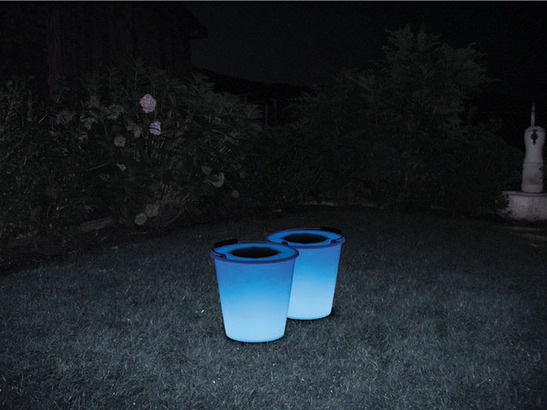 A friend of mine, Scott Belsky, runs a great company called Behance, which designs products and services for the creative community. One of their products is the Behance Network, which is a social network for creative professionals. It’s a great place where people share their work, look for gigs, and search for talent.
Last week, they posted an article on green design and the members of the Network that are leading the charge in their various industries to make products that are more sustainable. As the article states, “The goals of sustainable design are to avoid using non-renewable resources, lessen our environmental footprint, and bring people closer to the environment in which they live. Many designers are heading down the ‘greener path to design’ including architects and interior, industrial, graphic, fashion and urban designers.”
Some of the designers have made sustainable packaging for new CDs, and others have made solar-powered buckets that when left outside in the sun can become a source of light at night (see image above).
What’s important is that product designers are out there, looking to come up with interesting ideas for new items that can help us live more sustainable lives and leave less of a footprint on this planet, while still being aesthetically pleasing. My research has shown that although people want to buy “green” products, they don’t want to have to sacrifice quality in order to do so. They are willing to pay more for them as well. Savvy green marketers will hire people like the ones featured on this network to help them come up with new products to help them send a values-laden message to their customers and generate higher profits at the same time.
 Sustainable Ink