Key findings from Direct Marketing Going Green panel

875191As I wrote before, I was on a panel titled “DM Going Green – Separating Fact and Fiction” on January 13.  The session, which was organized by the New England Direct Marketing Association, was interesting and the conversation was lively.

Floyd Kemske, who serves as Editor of NEDMA News and Creative Director at Amergent, wrote up a nice summary from the event.  As it is not online yet, I’m pleased to include select portions of the piece below:

****From NEDMA News****
The session, moderated by Mariah Hunt, Senior Production Manager at Digitas, featured four practitioners from the front lines of the campaign for industry sustainability.

Each panelist provided a unique perspective on sustainability, its achievability, and its benefits. Ben Grossman, Director, Green Marketing & Sustainability Practice, Grossman Marketing Group , for example, has been instrumental in developing a model program for his company, which offsets 100% of its energy use through an organization called Renewable Choice Energy. This allows Grossman Marketing’s customers to credibly claim they make their printed collateral with certified wind power. In addition, Grossman has replaced petroleum-based window material in its window envelopes with corn-based material, which is both compostable and recyclable. Although the corn-based windows cost more, Grossman said, the company absorbs the premium so its customers pay the same as if they’d bought the petroleum-based ones.

According to Grossman, the company’s sustainability practices confer benefits in terms of increased sales, reduced costs, and more productive recruitment. But he advised the audience that sustainability isn’t something you can just say you do. “Customers are smart,” he said, “and they are conversant with the issues. They can discern a real commitment.” Transparency is important, he said. “Give people a way to dig down and investigate.” If you work at it and you are sincere, he said, you can use sustainability as a competitive advantage.

Mary McCormick, Senior Account Manager, Neenah Paper Inc., said her company was committed to manufacturing products with high post-consumer waste content, FSC-certification, and reduced carbon footprint. Before delving into some of the technical aspects of sustainable paper manufacture, she may have confirmed Grossman’s assertion about competitive advantage when she noted that the invitation for President Obama’s inauguration was printed on Neenah paper, chosen because of the company’s sustainability practices.

FSC certification, which is the premier paper certification standard, guarantees a chain of custody for pulp products from the harvest site to the finished product. It doesn’t simply guarantee sustainability. It also addresses social issues (e.g., rights of indigenous peoples) and forest recovery as well. Neenah’s website offers a calculator you can use to find the environmental savings you will achieve by using FSC papers. Neenah has also developed no-new-tree papers, including one manufactured from sugar cane bagasse.

The panel presentations were followed by a lively discussion in which some members of the audience sought proof that sustainability practices could increase sales. None of the panelists could cite such proof, but Ben Grossman stepped up and said that if anyone in the room wanted to conduct a test to determine whether a legitimate green logo would boost response to a mailing, his company was willing to subsidize it. There’s a man who backs up his belief in sustainability!


Excellent Green Design Newsletter

header1Graphic Design USA, a news magazine for graphic designers and creative professionals, publishes two e-newsletters per month.  One of them is entirely focused on green design issues.  Here’s a link to the latest issue. The newsletter is free and features a wide range of interesting news snippets about paper, industry trends, etc.  It’s worth a quick read every month.  Here’s a link to past issues as well as a sign-up form at the bottom of the page.  Enjoy!

Financial Times: Why sustainability is still going strong

financialtimes_logoA friend of mine sent along the following link to a piece written by Duke professors Daniel Vermeer and Robert Clemen, about the importance of a refined sustainability strategy during this economic crisis.  Vermeer is the executive director of the Corporate Sustainability Initiative at the Duke Fuqua School of Business, and Clemen is professor and faculty director of the Corporate Sustainability Initiative.

The piece, published last Thursday in the Financial Times, is titled “Managing in a downturn: Why sustainability is still going strong” and is a must-read.  Vermeer and Clemen’s main point is that given the current difficult business climate, organizations will understandably make changes to their sustainability and corporate governance efforts.  However, they warn against doing the bare minimum, as those organizations that fail to show a “commitment will find themselves at risk when the economic conditions improve.”

They make some interesting points, introduce some interesting people like Marcus Roberts, especially in the conclusion, and I wanted to make sure all of you saw it.  Here’s the link to the full story.

News roundup – it’s about the wind

As I have written in the past, renewable energy is critical to our nation’s future – not only from a carbon emissions perspective but also for national security reasons.

My firm’s adoption of and support for renewable energy (we offset 100% of our energy with Green-e certified wind power through Renewable Choice, the firm that both Whole Foods and Burt’s Bees work with to offset their energy usage) has enabled us to offer products and services to our clients that have helped them support the environment, without adding any extra cost to their respective bottom lines.  Because my firm made the commitment more than two years ago to absorb the additional cost of these wind power credits, we have been able to grow our business in turbulent times and attract new and progressive clients.

I am pleased to share two exciting news pieces:

  1. A PDF of an article published last month by the American Marketing Association’s Marketing News magazine (a live link is not yet available).  The staff collected a range of good and bad marketing campaigns from 2008 and asked various marketing professionals to chime in.  They asked me to comment on the marketing of T. Boone Pickens’ wind power initiative (which is now on hold due to economic concerns) – the news brief is on page 1 of the attachment.
  2. An article in The Somerville News (a newspaper in my company’s home market) about recent successes my family firm has had as a result of our green initiatives (one correction I need to make is that the reporter spoke with my brother, David, but refers to him as Steve, who is my father and president of the company).

In this increasingly difficult business climate, I can certainly attest to the importance of corporate sustainability and social responsibility programs as a means of differentiation from one’s competition (not to mention the right thing to do!).  Although organizations are looking harder for lower prices than they have ever done before, they are also very much interested in working with a partner who they respect and can learn from.  If your company does not have sustainability initiatives in place now, I implore you to start thinking about them.  Not only can they help you generate interest from prospective clients, but they can also help you save money (on energy, water, etc) – which is now more important than ever.

Sustainability as a marketing strategy

Below is a quick interview with Don Carli of the Institute for Sustainable Communication, during which he discusses sustainability as a marketing strategy for growth and provides some insights into where the green movement is headed.  Here are his main points:

  • Sustainability is becoming more top-of-mind for companies
  • Executives see sustainability as a growth strategy, especially in an economic downturn (so do I!)

Boston Business Journal article on my firm – It pays to be green

flagThe Boston Business Journal has been publishing quick focus pieces on specific Boston-area businesses and the efforts they are taking to remain resilient during the recession.  My firm was pleased to be spotlighted.  Below is the article that appears in the Friday, 1/9/09 edition of the newspaper (I am also including a link):

****

Marketer: It pays to be green

Grossman Marketing Group plans to focus its sales pitch on companies looking to be — and save — green.

That is because most businesses do not believe that using environmentally friendly marketing products can actually be cheaper than traditional marketing materials, said Steve Grossman, president of Grossman Marketing.

“Most people still have a hard time getting around the fact that green products can be cost-comparable,” Grossman said. “We want to lead more aggressively the no-extra-cost factor.”

Overall, the 100-year old print and marketing-materials company hopes its green push will stave off the effects of the recession, as direct-mail spending has dropped off considerably during past downturns. Envelope and direct mail makes up about 40 percent of Grossman Marketing’s business and grew nearly 20 percent in 2007.

The company also plans to step up the consulting services offered by the business, providing sustainability and marketing advice to its clients at no charge.

“It strengthens the relationship with our customers. They see us as their partners to advance their sustainability initiatives, but also, especially in the short term, to reduce their cost basis,” Grossman said.

Growing the green marketing business is just one part of Grossman’s three-pronged strategy for this year. With its recent investment in Consolidated Marketing Solutions Inc. of Massachusetts, based in Wilmington, Grossman Marketing is stepping into the online branding and marketing business.

“They want to do business with like-minded companies,” Grossman said.

— Jackie Noblett

****

Here’s a link to the article: http://boston.bizjournals.com/boston/stories/2009/01/12/story14.html

Agassi, Friedman, and sustainable enterprises

better-place-car

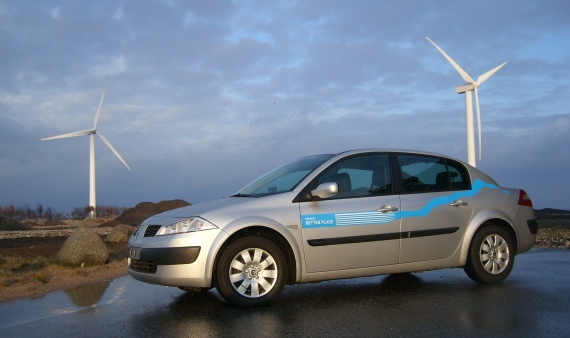
The Better Place car (prototype)

In July, I used an op-ed piece by Tom Friedman from the New York Times to discuss the importance of renewable energy, and how we as marketers can incorporate it into our printed communications.  One of Friedman’s examples was Shai Agassi, the founder of Better Place, a company focused on creating electric car grids around the world.  What’s exciting about their business model is that it approaches the car business much in the same way that cell phone networks like AT&T and Verizon Wireless approach their own – they plan to sell miles like these networks sell minutes.

Friedman wrote a follow-up piece about Agassi and his company last week, and I wanted to make sure readers of Sustainable Ink didn’t miss it.

I had the opportunity to hear Agassi speak in person earlier this month at the Museum of Science in Boston.  He was an inspiring presenter and certainly a person with a great vision.  Although I cannot guarantee whether his plan will work, I was impressed by his resolve, especially in the face of rapidly declining energy prices.  Although people may be less apt to adopt his electric car model when gas prices are under $2/gallon in the United States, he laid out a plan for success, and delivered his message in a clear and exciting way.

His determination should serve as an excellent example to other executives who have either made public commitments to sustainability or had been considering green initiatives when the economy was stronger and now are mulling whether they should move them to the back burner until the economy turns the corner.  My strong advice to these leaders would be to not let the tumultuous economic times distract them from positioning their organizations for success in the future.  Shorter-term approaches necessary for ensuring a stable enterprise may involve cost cutting now, but longer-term strategy should not be overlooked.  Generally, for organizations to be successful in the long-term, they must be able to successfully create new products, compete in new markets, and recruit the best talent possible.

My belief, is that in this environment of limited natural resources, undoubtedly unstable energy prices, and a public that cares deeply about fighting global warming (not to mention an administration that has made the reduction of carbon emissions a stated goal), organizations that incorporate environmentally-responsible practices into their businesses will not simply be making moves to address a short-term fad, but instead will be building sustainable enterprises.  They will be ensuring the long-term survival of their organizations in a future where their customers want to buy products that use less natural resources and leave less of a footprint on this earth.  In fact, IDC, a leading research firm, reported last week that a recent study found “continued support for sustainability initiatives despite current economic challenges.”

Although many companies will hold off on making any green investments while they face a deep credit crisis and sagging revenues, if they want to remain successful enterprises and position themselves for long-term success, sustainability must be a part of these plans.

Grassroots is the way to go: a look at GoGreen Somerville

ggsom_web_header_resize_new1My firm has become involved over the last several months with GoGreen Somerville, a coalition of businesses and non-profit organizations that leverage relationships, knowledge, and resources to green the Somerville businesses community.  I wrote a bit about this organization in May when it got a positive write-up in the Boston Globe.

GoGreen Somerville, where my firm is headquartered, is run by Vanessa Rule, who is very impressive.  She is motivated, talented and knowledgeable, an excellent combination.  I was excited to get involved in this effort, especially because it is on the grassroots level.  By building a laboratory of sustainability in our home city, this organization can possibly create a scalable model for helping other markets become more environmentally responsible.

Also exciting is that it includes a broad coalition of businesses: including bakeries, food manufacturers (chocolate), as well as a cleantech engineering firm and a wind power specialist.  It is a testament to the depth and breadth of talent in a small city that such best-in-class organizations spanning a wide range of industries have volunteered their time and resources to help make our city a more sustainable one.  It’s important to note is that if Somerville can become a case study for good environmental stewardship, it will help attract investment, new businesses, and talent; not to mention make it a better place to live and work.

I’m sure I’ll write more about this effort down the line, but I wanted to share this today, as GoGreen Somerville just launched its new website.

Tips from Deloitte: Top 10 list to green your client site

picture21A friend at Deloitte has made me aware of his firm’s “Greening the Dot” program, aimed at helping create awareness among Deloitte’s large employee base that being environmentally-friendly is an important thing to do.  The leaders of this effort frequently send out newsletters with tips to go green and initiatives that the firm is designing to be a more sustainable enterprise.

Not only is this effort a smart play from an employee retention perspective (given the economy, this will be important longer term rather than immediately) but also because it helps Deloitte send a values-laden message to its clients.  As a former consultant myself, I know that this industry is often seen from the outside as tough and unfriendly, and focused purely on numbers and deliverables.  However, I believe that Deloitte’s “Greening the Dot” program helps send a positive message to the outside world.  In the hypercompetitive world of strategy consulting, this can only help.

Below is a “Top 10 list to green your client site” that Deloitte released this week.  Clearly from its title, this is a series of ways that Deloitte employees can help the environment, and do so in very visible ways to the outside world:

  1. Unplug. Unplug “orphan” chargers and power cords which still consume energy when they are plugged in. Nearly 75% of all electricity used to power electronics is consumed by products that are switched off.
  2. Print less. Just because you’re at the client doesn’t mean you can’t reduce the amount you print! Consider having “paperless” meetings. With overhead projectors, we can eliminate the need for paper during meetings.
  3. Print duplex. To reduce your paper consumption, “duplexing“ can be done on copiers and printers.
  4. Use a reusable cup. Use a reusable cup or mug & save those paper or styrofoam cups from going in the trash.
  5. Recycle. Recycle paper, plastic, aluminum, glass, cardboard, and electronics in your local office.
  6. Turn off the lights. Be sure to turn overhead and task lights off as you leave offices and conference rooms. Also, avoid the need for unnecessary lighting by taking advantage of natural light whenever possible.
  7. Power down. Update your power management settings on your laptop to “stand by” or “sleep” after periods of inactivity when plugged in. If you only keep your computer on while you are actually using it, and put it on “stand by” for the rest of the time, you can cut energy use by 55%.
  8. Dress appropriately. Heating and air conditioning are typically the largest sources of energy use in the office. Dressing in layers can help your body adjust to temperature changes in the office. Keep a spare sweater in the office rather than turning up the thermostat or using a space heater.
  9. Travel less. Consider videoconferencing and other technology options to reduce your travel.
  10. Travel green. When traveling, be as environmentally friendly as possible. Bring a reusable mug, carpool and rent the most fuel efficient vehicles, reuse towels and linens, turn off the heating or air conditioning, and turn off all the lights before you leave your hotel room

The newsletter concluded with the following statement: “These small changes will make a big impact. Thank you for taking part in the efforts to make our office a little greener!”

This actionable series of tips, although just a start, provides a simple roadmap to Deloitte consultants of ways to easily go green when on the road at a client site.  None of these tips are difficult to implement, but all are sensible and can have an impact.

A spotlight on green design

A friend of mine, Scott Belsky, runs a great company called Behance, which designs products and services for the creative community.  One of their products is the Behance Network, which is a social network for creative professionals.  It’s a great place where people share their work, look for gigs, and search for talent.

Last week, they posted an article on green design and the members of the Network that are leading the charge in their various industries to make products that are more sustainable.  As the article states, “The goals of sustainable design are to avoid using non-renewable resources, lessen our environmental footprint, and bring people closer to the environment in which they live. Many designers are heading down the ‘greener path to design’ including architects and interior, industrial, graphic, fashion and urban designers.”

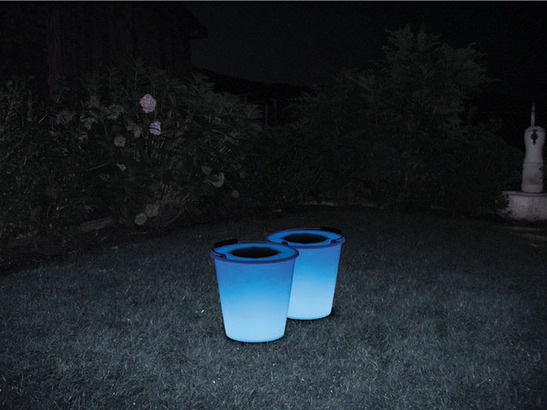
Some of the designers have made sustainable packaging for new CDs, and others have made solar-powered buckets that when left outside in the sun can become a source of light at night (see image above).

What’s important is that product designers are out there, looking to come up with interesting ideas for new items that can help us live more sustainable lives and leave less of a footprint on this planet, while still being aesthetically pleasing.  My research has shown that although people want to buy “green” products, they don’t want to have to sacrifice quality in order to do so.  They are willing to pay more for them as well.  Savvy green marketers will hire people like the ones featured on this network to help them come up with new products to help them send a values-laden message to their customers and generate higher profits at the same time.

Please click here to read the full article.