Some weekend entertainment…

On a largely unrelated but entertaining topic, I was excited earlier this week to be invited onto New England Cable News’ Friday evening quiz show.  I appeared along with Amy Derjue, who writes for Boston Magazine and manages their blog, Boston Daily, as well as Lou Whitney, who is the CEO and founder of 2 Boston-based companies,  Twig Flowers & DoggieDay.  News anchor, Chet Curtis, hosted the program.


I had the chance to talk about green marketing (at the end of the show, so that discussion is not contained in the links below).  It was a really fun experience, even though I came in second place!

Please check out the links below to the show.  I hope you enjoy:

Part 1: News IQ Quiz Show

Part 2: News IQ Quiz Show

Best practices in green printing: using printed collateral to support your organizational mission

My firm does a fair amount of work for SkyFuel, a solar energy company headquartered in New Mexico.  SkyFuel is a cutting-edge clean technology provider that has been recognized for their pioneering work in the renewable energy space.

SkyFuel needs to disseminate their ideas in printed form at trade shows, investor presentations and other industry events.  When they publish such literature, we have partnered with them to help make these pieces as green as possible, while always watching the bottom line.  For their uncoated items (business cards, letterhead, etc), we use a specific paper from the Mohawk Options line that is 100% post-consumer recycled.

Image courtesy of SkyFuel

Lately, when printing brochures for their various products as well as posters for a recent launch event, the client wanted to use coated paper, especially since the pieces contained images of the sun, so having the paper shine in the light was important.  We worked with the SkyFuel team to choose a stock made by New Leaf Paper that has the highest degree of post-consumer content of any paper on the market.  On all of their coated pieces, the following copy is included in a prominent position: “Printed on New Leaf paper that is FSC-certified and made with 60% post-consumer recycled fiber and processed chlorine free.  Energy used is 100% certified renewable or offset with “green tags.”

SkyFuel is an example of a best-practice leader in their field that leverages printed collateral to support their organizational mission to be good stewards of the environment.  Experience has shown that when a company couples a deep commitment to the environment with marketing pieces that underscore this mission, their message resonates most effectively with key constituents.  SkyFuel also is very transparent about the environmental benefits of their various printed pieces, which makes the green attributes even more tangible for the reader.

A spotlight on green design

A friend of mine, Scott Belsky, runs a great company called Behance, which designs products and services for the creative community.  One of their products is the Behance Network, which is a social network for creative professionals.  It’s a great place where people share their work, look for gigs, and search for talent.

Last week, they posted an article on green design and the members of the Network that are leading the charge in their various industries to make products that are more sustainable.  As the article states, “The goals of sustainable design are to avoid using non-renewable resources, lessen our environmental footprint, and bring people closer to the environment in which they live. Many designers are heading down the ‘greener path to design’ including architects and interior, industrial, graphic, fashion and urban designers.”

Some of the designers have made sustainable packaging for new CDs, and others have made solar-powered buckets that when left outside in the sun can become a source of light at night (see image above).

What’s important is that product designers are out there, looking to come up with interesting ideas for new items that can help us live more sustainable lives and leave less of a footprint on this planet, while still being aesthetically pleasing.  My research has shown that although people want to buy “green” products, they don’t want to have to sacrifice quality in order to do so.  They are willing to pay more for them as well.  Savvy green marketers will hire people like the ones featured on this network to help them come up with new products to help them send a values-laden message to their customers and generate higher profits at the same time.

Please click here to read the full article.

Newsweek: Green really means business

I had the chance to read an excellent essay in the 9/22/08 issue of Newsweek, by Zachary Karabell of RiverTwice Research, which I strongly recommend.  The main message of the article is that in an era of high energy costs, a company that has sustainable business practices will likely be able to save money and reap positive financial returns as a result.

Karabell writes that “sharply higher prices for oil and raw materials” have made “reductions in energy use economically viable and strategically important in a way that no amount of green activism ever could.”  He continues by discussing Wal-Mart’s efforts to “green” its supply chain: “To maintain its razor-thin margins at a time of record oil prices, which are raising the cost of importing goods from China, Wal-Mart has radically altered how its products are made and how they’re transported. One example: making detergent more concentrated, which leads Wal-Mart suppliers to use smaller plastic containers, which in turn use less petroleum to manufacture those containers, which can then be shipped with more containers in each carton, which leads to less cardboard, which makes it possible to transport more units on each ship or truck, which then reduces the amount of gas used to get those units from the factory to Wal-Mart outlets. The result: Wal-Mart maintains margins and reduces its resource consumption as well as that of its suppliers.”

Karabell also goes on to mention other profit-driven reasons for companies’ sustainability efforts: international regulatory rules as well as studies showing that companies that receive high environmental marks have shown above-average return on investment and stock price performance.

I have frequently written about the importance of green business practices, not only because they are the right thing to do but also because they help the bottom line.
Whatever the reason, the fact that companies like Wal-Mart, Du Pont and Google, to name a few, are all investing heavily in making their businesses less resource intensive, and therefore more profitable, is a great step.  Our national government has not done enough to create incentives for companies and individuals to invest now to save resources and money in the long run, so it is incumbent on the business community to take the initiative.

Relative to my business, Grossman Marketing Group, we strongly urge our clients to not only operate their core businesses responsibly, but also to make the effort to bring that message of sustainability to their constituents through their marketing and communications campaigns.  Whether it’s a piece of direct mail or a giveaway at a tradeshow, by leveraging environmentally-friendly materials, and clearly communicating what they have done to make their pieces less resource-intensive and the savings derived by doing so, they will send a values-laden message to their core customers and donors that will help reinforce their brand and build relationships for the long term.

Here’s a link to the full Newsweek article.

Best practices in green printing: quantifying the benefits of going green – part 2

I frequently encourage clients as well as readers of my blog to be transparent about the environmental savings derived from “going green” with their marketing and communications.

My firm works with the Massachusetts League of Environmental Voters (MLEV), whose mission is to advocate for sound environmental policies and to elect pro-environmental candidates who will adopt and implement such policies.   They are the state affiliate of the League of Conservation Voters.

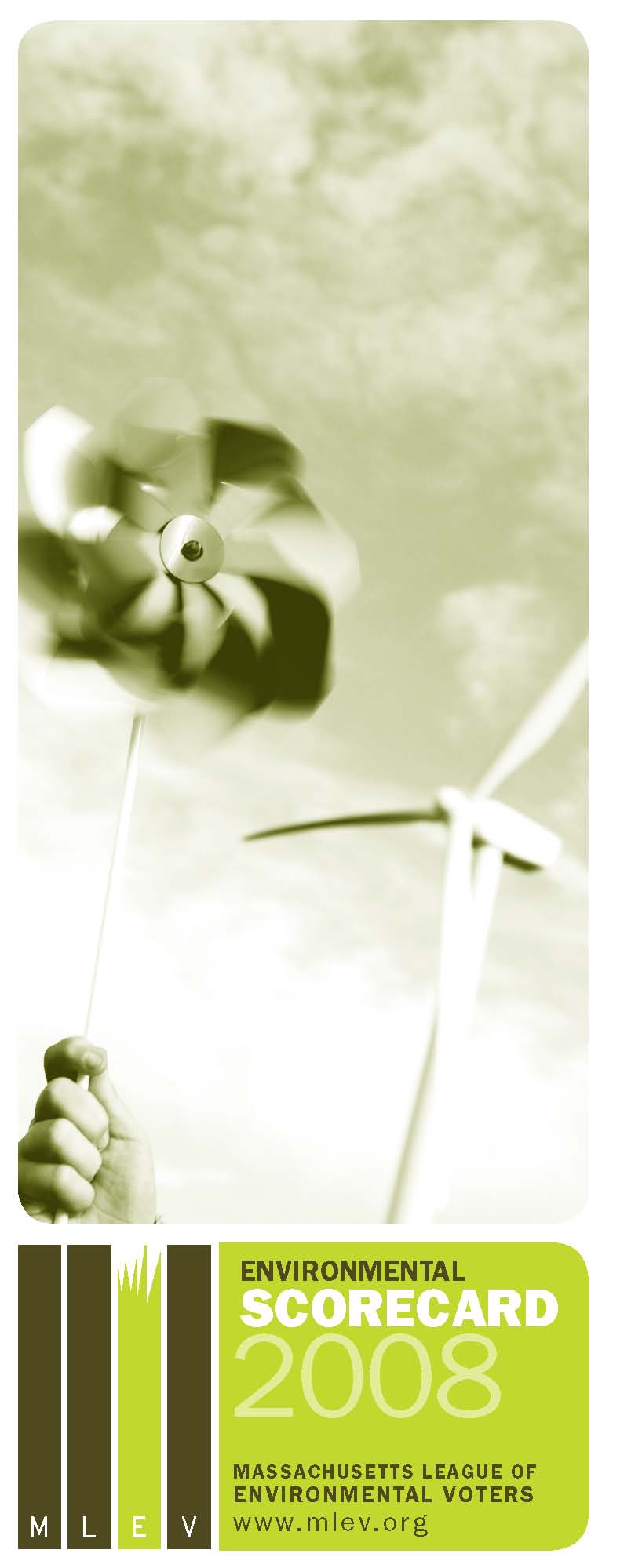
MLEV publishes an annual Environmental Scorecard, which serves as a guide to how Massachusetts legislators voted on key environmental issues during the past legislative session (2007-2008).  On page 2 of the attached PDF, MLEV quantifies the environmental savings from having produced their piece using responsible materials, based on calculations from the Environmental Defense Paper Calculator.

In addition, MLEV included several clean and recgonizable eco-logos on the back of the scorecard, underneath their return address on the mail panel.

These two transparent approaches (specific savings calculated and described inside as well as easy-to-understand labels on the outside) serve as a best practice for anyone in the marketing communications space.

Please click here to view a PDF of the scorecard.

Advertising Age: How to Avoid Eco-Fatigue

I came across an interesting article yesterday in Advertising Age titled “How to Avoid Eco Fatigue.”

The article, written by Jennifer Maxwell-Muir of Maxwell PR, a firm with a wide range of experience in the natural/organic industry, states that consumers are getting tired of the massive news coverage and marketing campaigns surrounding the “green” movement.  Maxwell-Muir provides some helpful tips on how companies can cut through the noise and reach consumers with a green message:

7 Tips to Avoid Eco-Fatigue

  1. Be remarkable. You can make the “greenest” product on the planet, but unless it solves a significant consumer problem, works or tastes better than anything in the market and offers a good value in ratio to price, consumers won’t buy it.
  2. Be green because it’s something you value, not as a marketing gimmick. Can coal really market the industry as being green and clean? What is Kermit the Frog doing with the Ford Escape? People smell falsehoods, and you go from bad to worse.
  3. Don’t be bashful. A lot of truly “green” companies are afraid to speak up because it feels too self-righteous. Consumers actually appreciate your efforts, no matter the size, as long as they’re earnest and a step in the right direction. The amplification of your message can increase with your commitments.
  4. Make it fun and engaging. Green doesn’t have to be staid. The average consumer doesn’t even know that the “hip” home cleaning products (is that an oxymoron?) made by Method are even green. And that’s entirely the point. This fast-growing brand wants consumers to love its product first — because they’re well-designed, smell beautiful and work well. They’re also planet friendly. Method’s attitude is: Why wouldn’t they be?
  5. Partner with an established nonprofit. When Kettle Foods wanted to add a cause element to its new Backyard Barbecue flavor, it immediately thought of wildlife habitat protection because it’s something it does in its own backyard. To inspire consumers to apply the same principles at home, Kettle partnered with a respected nonprofit, the National Wildlife Foundation. Then it encouraged people to get involved by creating their own backyard wildlife habitats. Who wouldn’t want a bag of free chips as thanks for attracting local birds?
  6. Invite consumers to join you. A flushable diaper doesn’t sound like a product that would inspire a cult following, but gDiapers realized early on that its core consumers were a vocal bunch. So gDiaper empowered them. By creating gMums and gDads, the company arms independent, trusted “spokespeople” with free product and the tools they need to spread the word. Doesn’t get much better than that.
  7. Move beyond green. Green is a fad. Sustainability is continual improvement. If you’re only looking at energy consumption, you’re just scratching the tip of the iceberg. Businesses that endorse a “triple-bottom-line” approach — Organic Valley Farms, New Belgium and Clif Bar, to name a few — also address their affect on society in their communities. Environment is the third leg of the stool, but without the other two, you wouldn’t have a place to sit.

Please click here to access the entire article.

Alternative energy: striking a balance between caution and execution

There has been increasing news coverage of alternative energy, most notably due to the explosion in energy prices over the last couple years.  I saw two interesting articles over the last day, one from the conservative editorial pages of The Wall Street Journal, and the other from The New York Times.

Please note – photo courtesy of The New York Times (photographer: Christinne Muschi).

The WSJ opinion piece points out that one of the key barriers to growth in alternative energy is infrastructure, most notably transmission lines connecting the sources of energy (wind and solar fields in rural and desert locations in the plains and Southwest) and the cities in which most people live.  The WSJ, in it’s characteristic fashion, blames this challenge on liberals, who they claim support alternative energy but oppose the construction of transmission lines, as they often have to go through protected lands.  Here’s a link to the piece.

The Times describes challenges and conflicts of interest that have arisen in upstate New York, where wind revenue has become critical for family farmers.  The article highlights instances when local town boards have voted on wind leases for firms when several of the individual members already had contracts in place for their own farms.  A key issue, the article goes on to discuss, is that there is no statewide (New York) law on wind power, so it is up to the individual towns to decide.  Here’s a link to the article.

If alternative energy is to become more widespread (according to the WSJ, wind only provides two-thirds of 1% of electricity generated in the U.S., and solar one-tenth of 1%), there will have to be better statewide and national legislation that fast tracks the development of wind farms, solar fields, and other energy sources.  At the same time, a balance has to be struck between speed and careful examination of the intricacies of development (impact on local environments, costs, etc).

Nevertheless, it is no longer debatable that these technologies are needed.  In fact, weaning our country off of foreign oil and developing better domestic, renewable (and clean) energy resources are key elements and ingredients to the future success of our country.  My sincere hope is that the right balance can happen in order to unlock this power and bring jobs to local markets with it.

Sustainability becomes differentiator for colleges

I read a very interesting article in the Boston Globe last week, which discussed the rising tide of “green” initiatives at colleges and universities across the country.

The article, titled “Not to be out-greened: Colleges grow more Earth-conscious to lure students,” focused on the increasing importance of universities’ environmental stewardship programs to college students, and how they can have an impact on their application decisions.  According to the article, Julian Dautremont-Smith, the associate director of the Association for the Advancement of Sustainability in Higher Education, said, “The current generation of students wants to go to schools that take their environmental responsibility seriously.”

Campus green initiatives have become so mainstream that even The Princeton Review has started rating schools on their respective commitments to the environment.  For more coverage on the Princeton Review survey and commentary on the explosion of green campus initiatives at colleges, please see an article from the most recent Education Life section in the New York Times.

The Education Life section (published Sunday, July 27) had several other articles on green topics that may be of interest to you.  Here’s a link to the section itself.

A key takeaway I had when reading these articles was that even if a school has a sterling commitment to the environment, if it does not clearly communicate its good work to the community it large, the impact on its applications, donations and goodwill generated will be muted.  Therefore, it is critical that schools get the message out to their constituents (through their websites, social networks, and printed marketing materials, among other channels) that they are firmly committed to sustainability.  Whether the printed versions of these materials are made with wind power or printed on post-consumer recycled paper, it is important that these green initiatives are translated onto the printed page.

For more on green printing recommendations, please see a post I wrote earlier this year.

Exciting offer for Sustainable Ink readers

Hi all – my last post on Tom Friedman’s op-ed, and the traffic and links from all of you, got noticed by his publisher, Macmillan.

They contacted me yesterday with an offer for readers of Sustainable Ink.  From now until August 11th, they are giving away the audiobook version of his bestseller, The World is Flat, online in anticipation of his new book Hot, Flat, and Crowded: Why We Need a Green Revolution — And How It Can Renew America. You will also receive an exclusive audio excerpt of his new book well before its September publication.

Here’s a link to the offer: http://www.thomaslfriedman.com/giveaway

As someone who’s read The World is Flat, I definitely recommend it, and this is a way to get it for free.

Have a great weekend!

“Texas to Tel Aviv”: Excellent op-ed piece by Tom Friedman in the NYTimes

I had the chance to read Tom Friedman’s most recent op-ed piece, “Texas To Tel Aviv” in the New York Times today, and felt compelled to share it with the folks who read Sustainable Ink.

The article focuses on two people: T. Boone Pickens and Shai Agassi.  Pickens, who made his fortune in the oil business, is leading a charge to get the United States to devote a significant amount of resources to the development of wind energy.  In fact, he has spent $2 billion of his own money buying land in the Texas Panhandle as well as 700 wind turbines from GE (their largest turbine order ever), in order to create the largest wind farm in the world.  To read more about his efforts, please visit the Pickens Plan website.

Agassi, an Israeli technology guru, launched Project Better Place last year, with the goal of creating a nationwide grid of electric cars in Israel.  The project has a very ambitious mission, but has been gaining traction with car makers and governments.

The reason I wanted to call your attention to the column, and more importantly to these two entrepreneurs with bold visions, is because electric cars and renewable energy are game-changing initiatives that have the potential to have a dramatic impact on the fight against global warming as well as our nation’s addiction to oil, most of which comes from foreign sources.  Pickens and Agassi are showing that doing well while doing good are not mutually exclusive ideas.

Over the last 16 months, my firm has been at the forefront of bringing renewable energy to the marketing industry.  We not only have powered our own plants with wind energy, but created a cooperative group that comprised a half-dozen other firms in our space to do the same.  As a result, we have saved tens of thousands of gallons of oil as well as eliminated more than 1 million pounds of carbon emissions from the atmosphere.  For these efforts, we have been recognized by the United States Environmental Protection Agency.

Pickens and Agassi are impressive because they are not waiting for the US Congress to act to make renewable energy initiatives easier.  Neither should we.  Each of us in our own way, either personally or organizationally, can do our share to reduce our dependence on oil by moving to renewable energy.  My firm, Grossman Marketing Group, decided that the best way to do this is to use wind power to produce all of our marketing materials.  Our efforts have been endorsed by some of our country’s most reputable environmental organizations, including the League of Conservation Voters and the National Park Foundation.  In addition, many of the nearly 100 clients that have produced their materials with us bearing our proprietary wind power logo have received positive feedback in the marketplace for doing so.

It is incumbent upon us in the marketing industry to do our part to fight global warming and the country’s addiction to oil, and we believe wind power is the best way to make that a reality.

For a link to the full Friedman column, please click here.